S. A. Miro, Inc.: Early BIM Key to Data Center Design
By Brad Vassau, P.E., S.E., Structural Associate, S. A. Miro, Inc.
When Building Information Modeling (BIM) is discussed, the conversation often centers on efficiency and visualization. However, in the world of data center design, BIM is not a value-add, but instead the backbone that makes the project viable in the first place.
Having worked on both commercial buildings and large-scale data centers, the difference in coordination requirements is significant. Traditional buildings certainly require discipline coordination, but in many cases, unresolved conflicts can be discovered and addressed during construction without catastrophic cost or schedule impacts. That margin for error simply does not exist in data centers. At their core, data centers are performance-driven facilities. While architecture, structure, and envelope remain critical, the design is fundamentally shaped by the mechanical, electrical, and plumbing systems (MEP) that power and cool the operation.
Driven by MEP
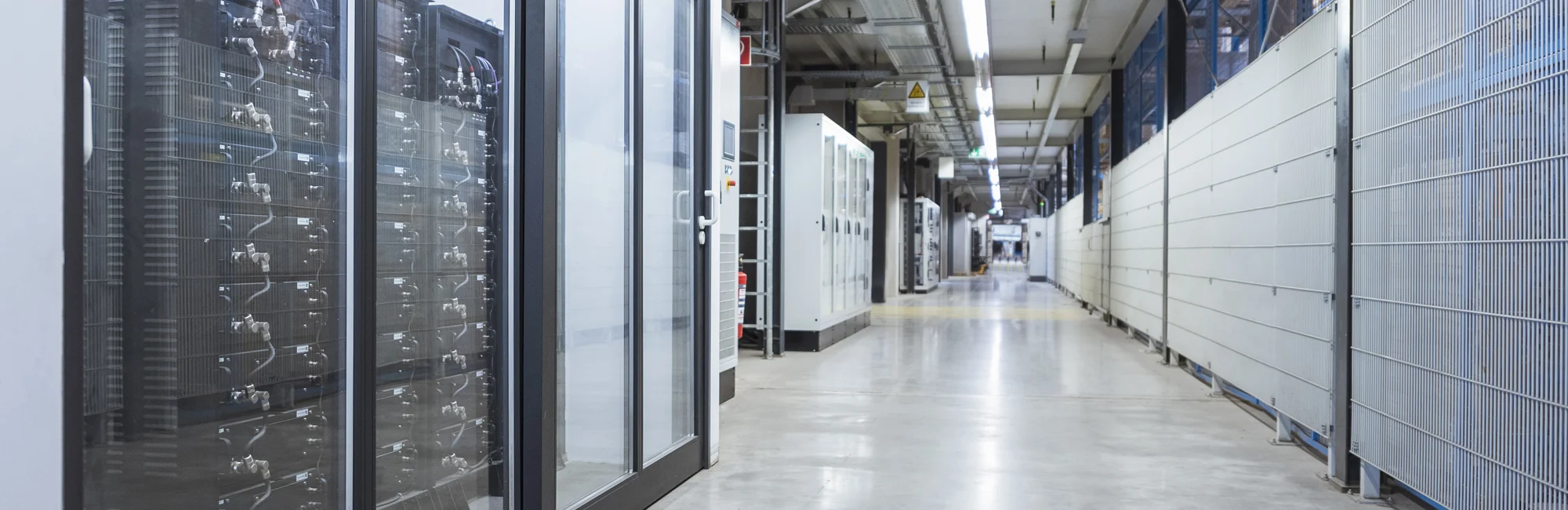
Data centers exist to house servers, and servers generate a tremendous amount of heat. Cooling, redundancy, power distribution, backup generation, and uninterrupted operation drive nearly every design decision. As a result, the density of mechanical, electrical, and plumbing far exceeds what you see in any other type of construction. From a structural standpoint, this reality reshapes everything. Framing depths, column layouts, lateral system locations, foundation sizes, and even member selection are often dictated by MEP routing and equipment requirements. Framing that might otherwise be the most efficient structural solution may need to be reconfigured to a shallower, heavier section to accommodate a louver location or a large duct run. Multiply that condition across an entire building, and coordination quickly becomes the governing design constraint. This is where BIM becomes indispensable. Without a shared, highly coordinated model, these conflicts do not gradually reveal themselves, but rather, they compound.
Templates
Data center projects begin with a template. This is typically a proven layout with established routing zones and typical equipment locations. These templates are extremely valuable, but they are not static. Regional power requirements change. Utility tie-in locations shift. Equipment selections evolve. As the MEP design develops, the template will morph, and structural design must constantly react to those changes. That evolution demands a structured coordination process. On most data center projects, this means meetings that include the global design team. It also means discipline-specific breakout calls, and recurring BIM coordination sessions. These BIM meetings are where real progress is made. Clashes between structure, MEP, and architecture are identified early and resolved intentionally, rather than discovered late and patched. It is critical to solve problems during design, not during construction.
Rooftop and Specialty Equipment
One of the most challenging aspects of data center coordination is designing structural support for major mechanical equipment before the equipment itself is fully defined. Rooftop units, air handling units, generators, and specialized cooling systems often do not have finalized weights/dimensions or attachment requirements during early design phases. Unlike typical floor loading, these are not conditions that can be addressed with uniform loads and assumptions alone. Structural engineers need real information. If it’s unavailable, we are forced to make conservative assumptions that must later be revisited. Once the general contractor is on board and equipment procurement begins, those assumptions must be checked against actual selections. That often means revisiting member sizing and connection detailing. This is manageable only if the design team has remained closely aligned through BIM coordination from the start.
Underground Coordination
Data centers require substantial foundations to support heavy equipment, dense server racks, and robust lateral systems. Spread footings, grade beams, and mat foundations are often significantly larger than those used in conventional buildings. At the same time, the underground space beneath a data center is densely populated with plumbing and electrical lines crisscrossing the site. Without early and accurate coordination, conflicts between foundations and underground utilities are inevitable. Addressing these conflicts during construction can be extremely costly. From experience, meaningful underground coordination is most effective after the structural foundations are largely finalized, typically soon after the Design Development milestone. At that point, foundation sizes and locations are stable and can be coordinated with accurately. When done properly, BIM allows the structural and MEP teams to see the full underground condition clearly and resolve conflicts long before they reach the field.
Routing Changes
MEP routing changes frequently in data center projects. Tie-in locations outside the building shift. Redundancy requirements evolve. System capacities increase or decrease. These changes are not mistakes. Rather, they are a natural consequence of designing highly customized infrastructure within real-world constraints. The challenge arises when those changes occur in isolation. When one discipline is not fully aware of the latest structural design, coordination gaps emerge. In fast-paced projects, it is easy for teams to focus inward, optimizing their own systems without fully accounting for the impact on others. This is not a criticism of any one discipline. Structural engineers are just as capable of falling into the same trap. Data centers simply demand a higher level of continuous awareness and communication than most building types.
Beyond the Growing Pains
The industry has evolved significantly over time. Earlier data center projects helped shape today’s best practices, particularly in the area of coordination. The experience gained during those early projects laid the groundwork for the more collaborative and efficient approaches we see today. Today, those lessons have largely been absorbed. With the right players involved, data center design has become a remarkably well-oiled machine. BIM is no longer just a modeling tool. It is the shared language that allows architects, engineers, and builders to work toward the same outcome in real time. Early coordination and frequent communication are what make that machine run smoothly. In data center design, success is not about any single discipline getting everything right in isolation. It is about the entire team getting everything right together early.
about the author

Brad Vassau, P.E., S.E.
Published online Commercial Construction & Rennovation
Brad Vassau is a Structural Associate at S. A. Miro, Inc.