Hilton Garden Inn at Union Station Full Case Study
OVERVIEW
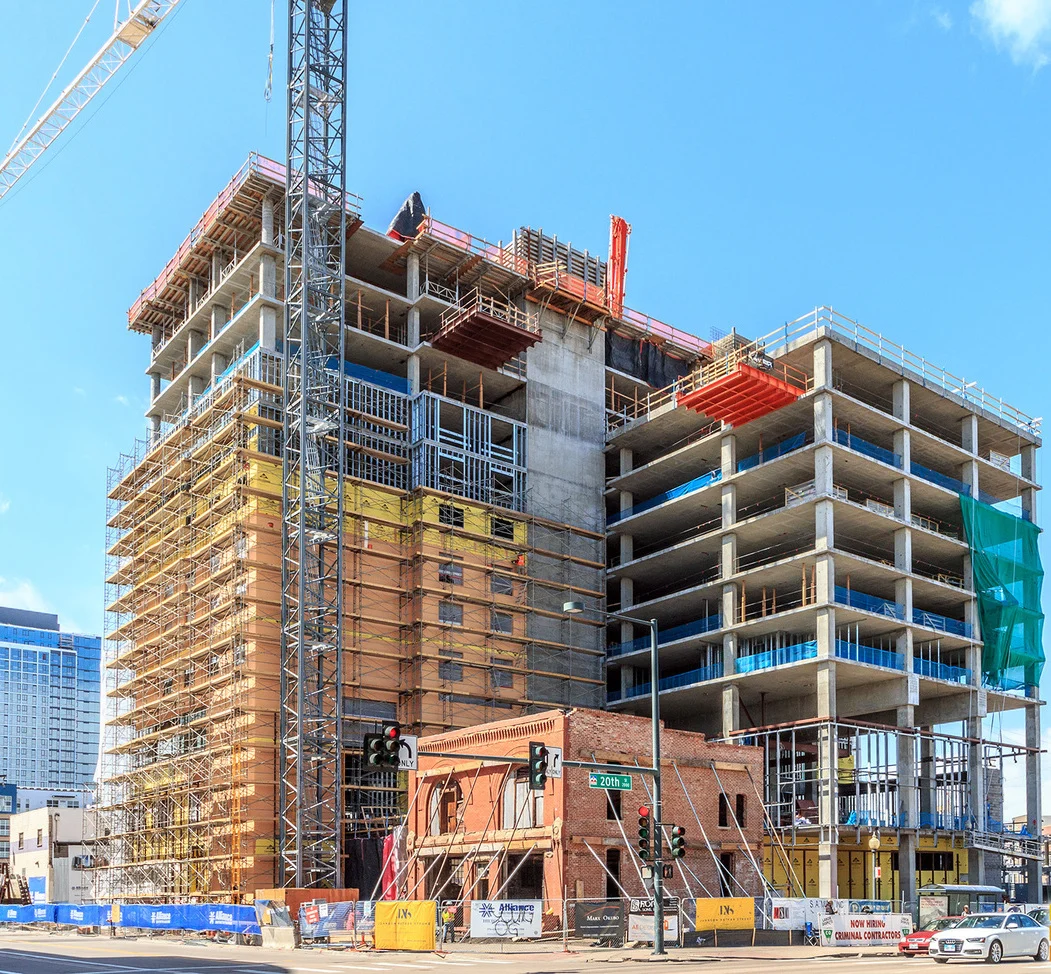
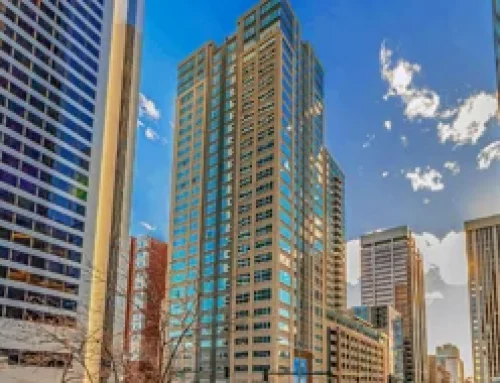
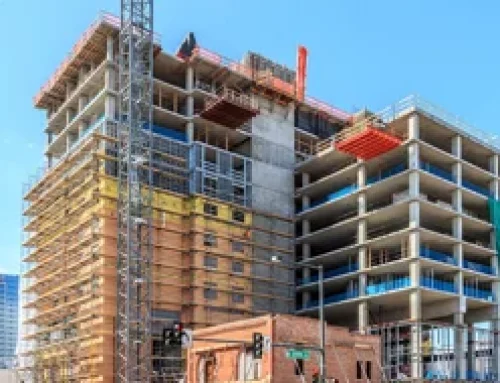
The Hilton Garden Inn Denver Union Station brought a new hospitality destination to Denver’s rapidly growing Union Station neighborhood while preserving one of the city’s most historic structures. Located directly across from Coors Field, the $80 million development includes a 12-story hotel tower with 233 guest rooms, meeting and ballroom space, and two levels of below-grade parking.
A defining feature of the project was the integration of Hose House No. 1, Denver’s first fire station dating to the 1880s. Rather than demolishing the historic building, the development team incorporated it into the project as the Woodie Fisher Kitchen & Bar. This created a design that balances historic preservation with contemporary architecture.
CHALLENGE
The project presented several significant engineering and construction challenges.
The elevated groundwater table created the need for a robust below-grade structural solution capable of preventing water intrusion while resisting uplift forces. At the same time, the scale of the mat foundation introduced complex mass concrete considerations, particularly given the desire to complete the placement during the summer construction season.
Managing the heat generated during curing was critical to preventing thermal cracking and maintaining long-term durability. Achieving this without mechanical cooling systems required careful planning and real-time temperature monitoring throughout the curing period.
Additional structural considerations included accommodating specialized loading requirements, such as fire truck access at Level 1 and an elevated pool structure at Level 3, while supporting the architectural vision for the development.
APPROACH
As structural engineers, we worked closely with the contractor, concrete supplier, architect, and developer to develop solutions that addressed both the site’s challenging conditions and the project’s construction schedule.
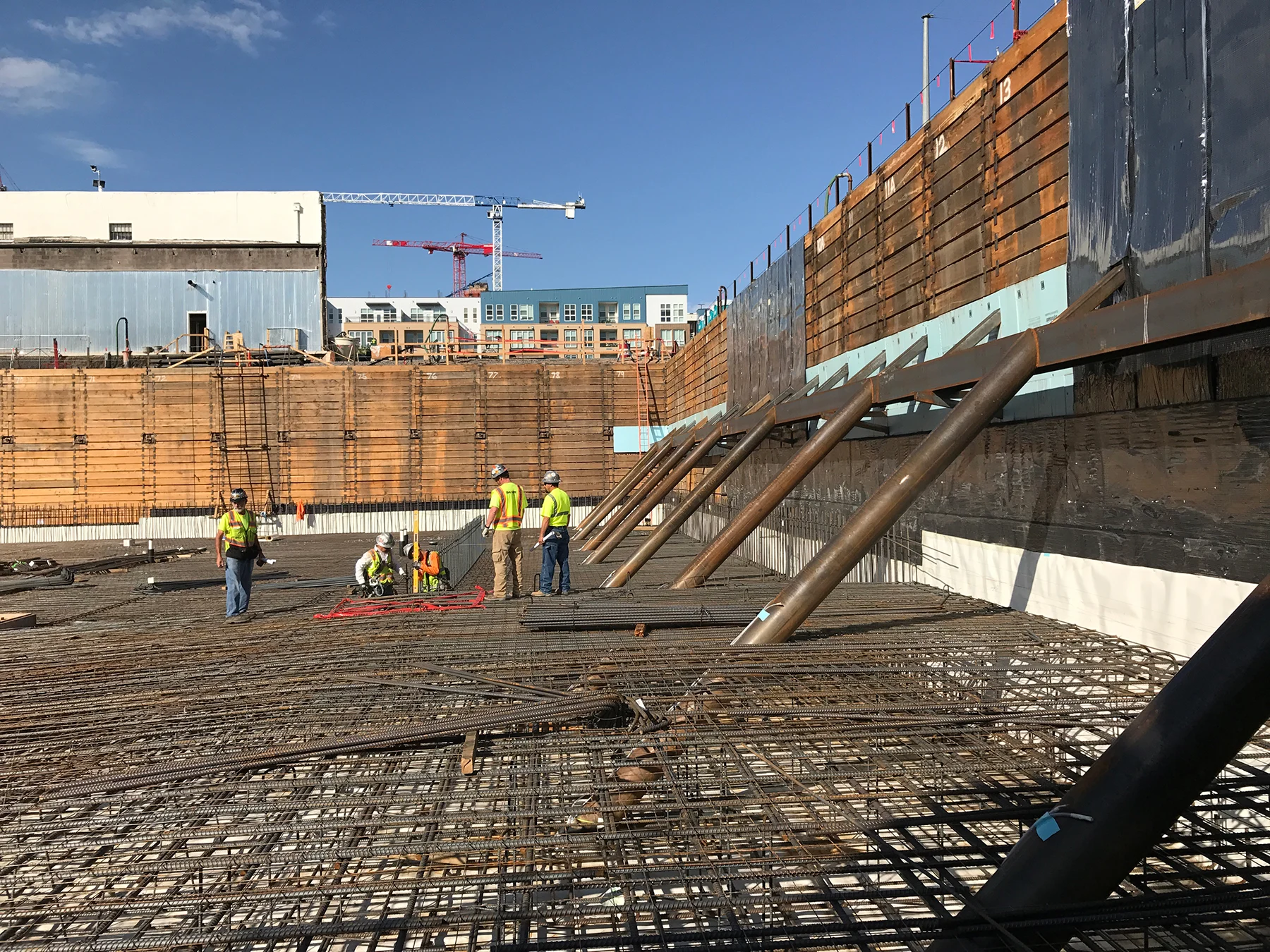
A primary focus was the design and execution of the mat foundation system. Due to groundwater levels significantly above the planned parking garage elevation, we designed a watertight “bathtub” foundation system. The foundation ranged from four to seven feet thick and extended across more than 31,000 square feet.
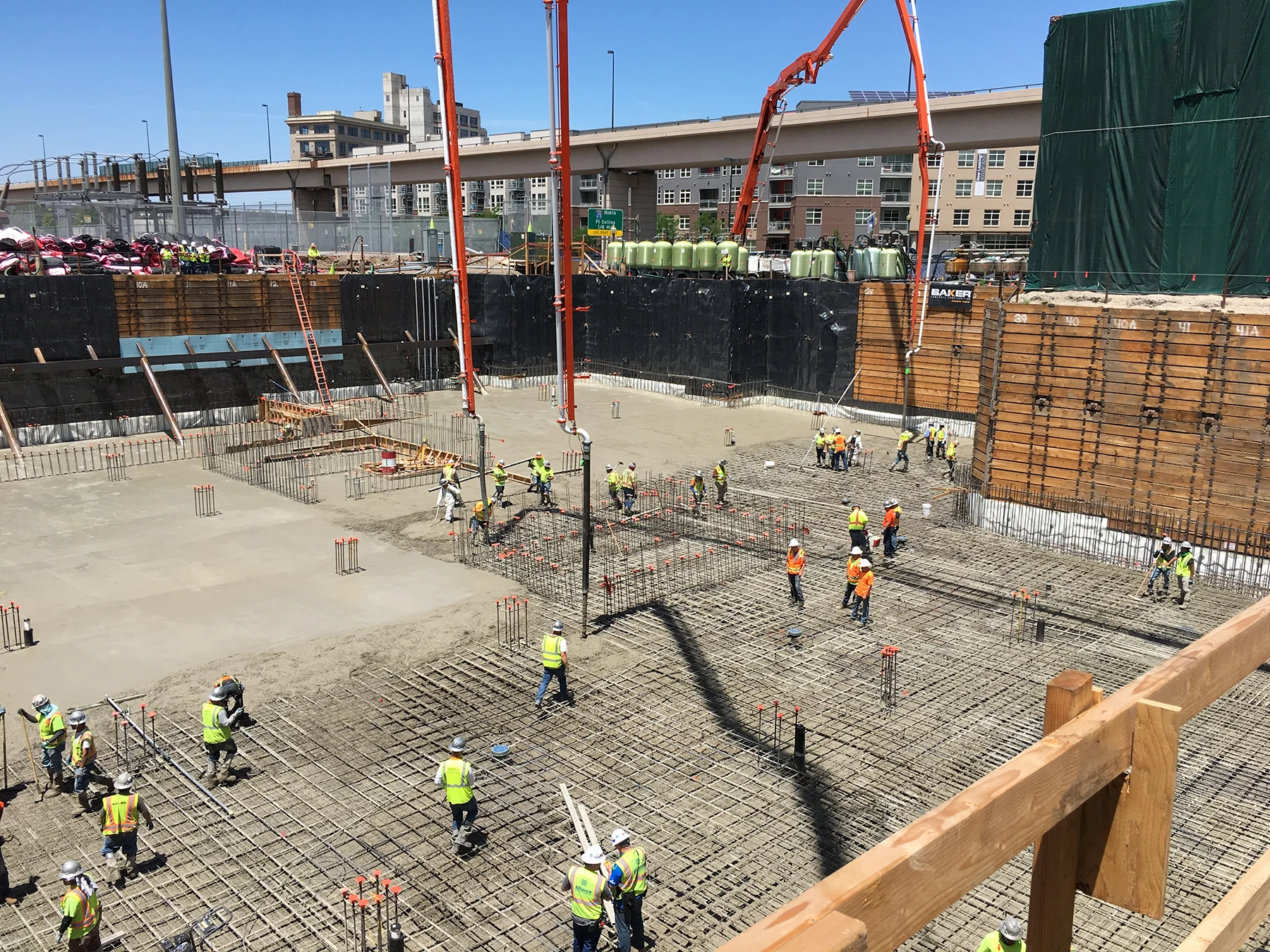
Because the foundation required more than 4,500 cubic yards of concrete to be placed continuously, our team collaborated with project partners to develop a mass concrete strategy that eliminated the need for supplemental cooling systems. By optimizing the concrete mix design with significant fly ash content and implementing a comprehensive thermal monitoring plan, we were able to control internal temperatures and thermal differentials throughout the curing process.
The placement operation required extensive coordination, utilizing four concrete pump trucks, a Telebelt system, and concrete deliveries from five separate batch plants to maintain continuous production and meet placement targets.
RESULTS
The Hilton Garden Inn Denver Union Station was successfully completed in April 2019 and opened in time to welcome guests for Colorado Rockies Opening Day.
The project delivered a modern 233-room hotel while preserving and celebrating a key piece of Denver’s history. The foundation placement established a Denver record for the largest continuous concrete pour in the city’s history, exceeding 4,500 cubic yards in a single operation.
Through close collaboration between the design and construction teams, the project delivered a durable concrete structure capable of supporting the hotel’s long-term operational needs.
The project stands as a testament to the value of integrated project delivery and demonstrates how engineering innovation and collaboration can successfully address complex construction challenges while achieving ambitious project goals.